Standing in the smoking area of a bar in Dalston at an after party for a fashion event, I caught the attention of a guy. We got to speaking, and after weaving through a myriad of conversational topics, he abruptly declared that he has never had a one night stand. He prided himself on it in fact and maintained that he never wants to have one. Interesting choice of chat I thought, but I was intrigued, nonetheless. It got me thinking, why is there a sudden behavioural shift and reluctance from Gen Z to engage in promiscuity? Aren’t we the ambassadors for the new hookup age? This question began floating in my mind again when I picked up a copy of Ex-Wife by Ursula Parrott after browsing the shelves of Waterstones in late October. A 1929 classic, its blurb describes that the book “plunges us into the ‘era of the one-night stand’” (Parrott, 2024 [1929]).
This piqued my interest, and I remember discussing with a friend that I was surprised that time would be described as such. Of course, I don’t think our generation invented sex, and I know the twenties is described as ‘roaring’ for a reason. Though, my mind was leaning more towards the jazz age, long nights spent at speakeasys, and extravagant parties thrown at grand apartments. I suppose the general debauchery that characterised that time period would of course entail sex outside the confines of marriage. Of course, the social climate of America at the time meant women had their first taste of empowerment (with the right to vote) and so with that ensued a general sense of optimism. Social norms surrounding femininity and sexuality were challenged. Dresses were short and hair was shorter. Times were had, and women were much freer to enjoy their youth instead of being tied down to a life of humble, and at times, stifling domesticity. That was at least in the city, where this book took place.
Our protagonist, Patricia, finds herself to be a divorcee after the failings of her ‘Great Romance’ with her husband at the young age of 24. In an act of rebellion, she takes on New York City and all it has to offer. I adored this book. Within it is everything I love to read about, fashion, romance, great loves, gallivanting, and endless nights enjoyed. It takes us through evenings spent drinking scotch and mornings spent breakfasting with the latest dalliance. It is beautifully written and extremely modern. I think what makes this book so visceral, is that the experiences and feelings of Patricia, a semi-autobiographical account of the life lived by Parrott herself, have endured the test of time. The book highlights that our feelings have never been felt by us alone. All of the anguish, sadness, or confusion we might feel has indeed been felt by those before us in the plenty. There is solace to be found in that.
Reading this at the same age Patricia is at the start of the book, a hundred years after the book is set, is extra special. Although neither I nor my friends are ex-wives (though, how chic would that be to be one in your mid-twenties?), many of the conversations surrounding men and the state of dating shared between Patricia and her best friend Lucia practically mirror that of me and my friends. There is a general state of distaste shared towards romantic entanglements with men, particularly when Patricia is fresh from her separation. Some years into her singledom, in conversation with a male companion, who questions whether “adventuring in bed” with a string of artists and ‘serious men’ is still fun, Patricia responds: “I’ve stopped. I thought it ought to be fun, but it was always dreary… like prospecting for gold and finding a coal mine” (Parrott, 2024: 204).
This is a sentiment shared by many women today, and particularly the Gen Z-ers. Casual sex is fun for a while, but then dreary. It reveals itself to be without depth, utterly colourless, and at its worst, demeaning. When adding in the reality of the orgasm gap for heterosexual women, and the porn-addled brains of our gender opposites resulting in even less sexual fluency for a whole generation (or two) of men, one night stands just don’t seem all that appealing anymore. Can’t we get a little emotional intimacy with our portion of sex?
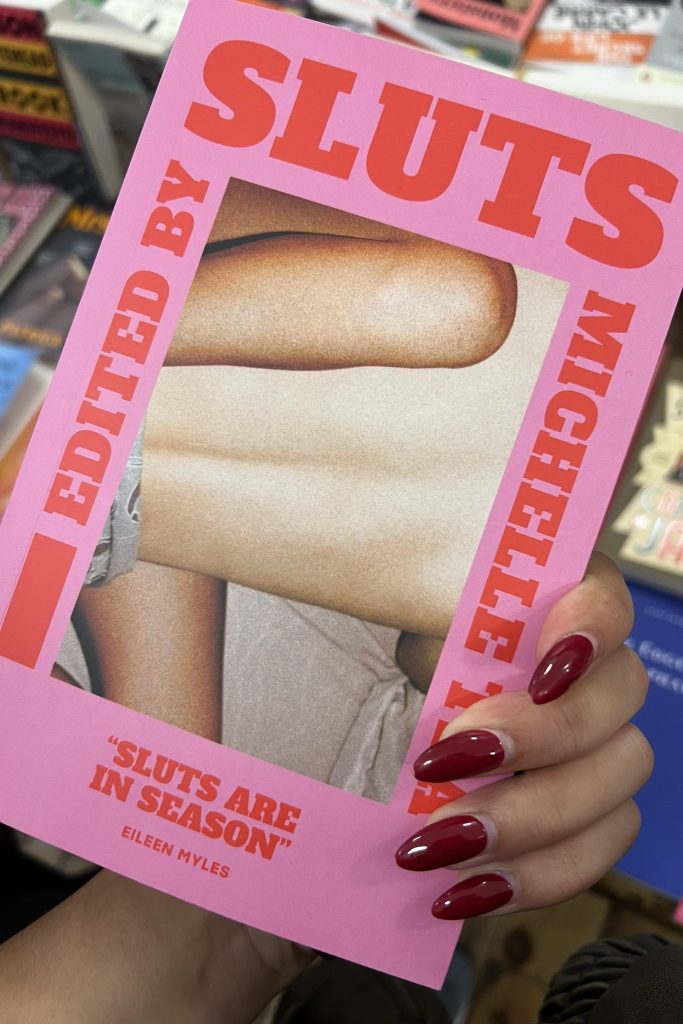
Currently on the TBR list
To avoid sounding like a typical Gen Z ‘sexless puritan’, as my agemates are described in The Telegraph, I want to make it clear that my stance on sexuality is not that it should be restrictive or repressed. I am not advocating for the adoption of abstinence by all. Sex, in my view, is not a ‘sin’ outside marriage, or even outside of a monogamous relationship, and I am an advocate for sex positivity. Sex positivity means fighting stigmas, reducing shame, and pushing for the right to choice. Go forth and prosper as they say.
Dame Jilly Cooper, high priestess of smut, argues there’s a general cheerlessness surrounding Gen Z because “they don’t have sex anymore” (Telegraph, 2024). She wouldn’t be entirely wrong with this statement, as surveys across the West from the likes of the CDC to UCLA highlight that Gen Z, particularly those 25 and under, are having less sex than the generations before them. ELLE writer O’Malley states we are currently in a sex recession and it’s somewhat alarming that there is a decline in sexual encounters amongst young adults today. Not only is time between the last sexual encounter growing (1 in 4 Gen Z women have gone 12 months since their last time in the sheets), the age people are making their sexual debut is also getting older (source: CDC, 2021) which is also interesting sociologically.
Perhaps COVID-19 is in part to blame (only for the latter statistic), but I think a decline in sexual activity is symptomatic of a shift in the desires of Gen Z women. Many women within my circles were Tumblr fiends. We were constantly fed the lies of choice feminism, as discussed briefly in my first ever post, Dating Disenchantment. As such, we were told to play by men’s rules in attempt to achieve a ‘gotcha!’ moment. The line of reasoning was that we were showing men they’re not the only ones that can engage in casual sex and be emotionally redundant. We were proving that women can have one night stands too and enjoy it, that women can want a casual fling just as much as man can. This is true, and I can see the logic. Sexual liberation was packaged to us through aesthetic pages featuring femme fatale tropes, endless images of long legs in stockings, and petite women in lingerie, as well as slogans that read ‘be a slut, do whatever you want’ in cute, coquette-like fonts.
None of this was bad per say, there is nothing inherently wrong with casual sex and it should no longer be regarded as some type of moral stain to be worn by a woman if she engages in it. Where it all went wrong, was advertising meaningless sex as some kind of key to female empowerment and pushing this message to a generation of women who at the time were impressionable teens. Adolescents who lack the emotional maturity and understanding to traverse the landscape of (casual) sex. What resulted was mass self-objectification with little rewards to reap.
After feelings of empowerment have failed to keep its promise, Gen Z women are struggling to navigate the dating playground and the world of sex as they now feel disheartened by the emptiness of casual encounters. We crave depth, intimacy, respect, and with that, unabashed sensuality. These are hard to come by however within a hookup culture. Perhaps this sexlessness is indicative of a post-hook-up epoch. More young women are clinging to celibacy and going ‘boysober’ in rebellion to no longer engage in drab casual hookups. We can see that this sexual shift has gone from one extreme to another. We are also seeing it elsewhere with South Korea’s 4b movement in which young women are forgoing dating, sex, and marriage until the experiences of women improve and total women’s liberation is achieved.
Psychologists today urge us twentysomethings to have more sex, if just for the mental health benefits alone. It’s healthy, it’s good for you, it’s a fun time. However, Gen Zs sexual decline makes sense, when men and women alike are finding it harder to date, and subsequently, finding it harder to find sexual partners. When our generation is fed up with the hookups, as documented by video essayists like Jordan Theresa and Madisyn Brown who have investigated the failings of the post-90s sexual revolution and our dissatisfaction with dating apps, it is clear we are at the end of the generational hoe phase.
Just like the modern woman of the flapper era was navigating her newfound freedom and taste of liberation, the modern woman of our current ‘roaring twenties’ (hold the roaring…) is navigating the newfound sexual liberation that presents itself alongside technological advancements where access to people (and sex) is more readily available than ever before. With that comes some obstacles. Hence, we experience similar issues to those Parrott wrote about (and experienced) in her work. In Ex-Wife, when Pat spoke to an older man about their current times, he answered, “we live sexually in a world of mixed and broken codes, and irregular and extravagant experiments and defiance” (Parrott, 2024: 265). Just shy of a hundred years on and the same can be said of today.
When looking back through entries on my journal app and stumbling on an entry from dinner with friends in March, I noted that amongst the many topics of our conversation that night, was the rise of young and sexless women, “lowkey like ourselves”. When reading that back to my friend some months later and laughing, she told me, “Chloe, there are a lot of words you can use to describe me, but sexless isn’t one of them”. Not all hope is lost.
So, is the modern Gen Z woman over the hookup?


Leave a Reply