“Now she just says she hates the feeling of being hungry” bellowed a friend over blaring samba rock in a packed pub-turned-discotheque. My face crimpled in a state of equal shock and horror. Her colleague, who has been taking GLP-1 injections by various brands through non-regulated means, has suffered a cocktail of side effects from the injections. These symptoms, however brutal, (non-stop vomiting, blacking out on shift), fail to serve as a deterrent to the ultimate prize, effortless weight loss.
Now, hunger to her is merely an aggravating emotional state, easily silenced by needle prick. It is no longer a call to feed the body, but an embarrassing reminder of her body’s processes at its most primal. Hunger is no longer an itch she wishes to scratch.
Exposure to weight loss injections seem to be unavoidable in every aspect of our current zeitgeist. Social media is flooded with plastic surgeons pointing out which celebrities have ‘Ozempic face’. Equally, we engage with threads which debate which singer or actress looks especially gaunt or emaciated. We see one of, if not the most renowned, world-class athlete of our time inject herself with a GLP-1 medication to an audience of 125.6 million without, seemingly, a thought about its repercussions.
It’s selling point as a “medicine [her] body needed” was that it provides less pressure on the joints, and predictably, the ability to improve body image(!). Both are facile attempts in legitimising her ‘need’ for this medication. They immediately fall flat as soon as you ask yourself why a super athlete would ever have to manage their weight through an aggressive appetite suppressant to alleviate joint pressure.

When I think about Ozempic, Mounjaro and the other GLP-1 offerings, a similar quick-fix to the contested issue of rapid weight loss comes to mind. Going through the Instagram archives, we can find a product that was also mass marketed, through similar means of social media utilisation, celebrity endorsement, and of course, misinformation. This less invasive offering of no-effort weight loss: detox teas
Flat Tummy Co, Boo Tea, (which surprisingly is still sold in Holland & Barretts), and various lesser known brands arrived on our phone screens in the mid-2010s, promising the world in a teacup, skinniness. As drinkable appetite suppressant, they also dangerously doubled as a laxative and diuretic through the use of naturally occurring ingredients. Co-opting medical jargon, these companies (notoriously Flat Tummy Co) promoted their products as a detoxing, purifying herbal remedy which led to flat tummies and little body fat, with no dieting or exercising required.
Another fad diet had gained public attention, under the guise of ‘nature’s remedy’ to a flabby gut. The company’s messaging was dispersed pervasively through carefully selected reality-tv juggernauts and ‘everyday’ influencers. The aesthetics of the tea and its packaging was a masterclass in marketing, and the company was able to sell for $10 million in 2015, during the height of their fame.
Translucent tea bags brimming with dried flowers and remnants of varying leaf underscored their ‘bares all’ approach to the brand. There were no nasty, hurtful, synthetic chemicals to be found, or ingredients that were in various diet pills on the shelves of your local Superdrug or in the seedy underbelly of the web. This was just good ol’ tea, plain and simple.
At 15, with a particular sensibility to diet culture due to an amalgam of low body image, general adolescence, and coming from a home in which diets were somewhat revered and not feared, I was the perfect target for a ‘flat tummy’ tea. A tremendous part of young girls’ socialisation is that we are conditioned to hate both ourselves and the way we look. It seems that in order for us to begin the journey to womanhood, a degree of self-loathing must ensue, at least for a little while. It is our initiation ritual, courtesy of patriarchal conditioning.
*
I scrolled through Instagram and watched as all of the Kardashian sisters shared pretty, aesthetically pleasing pictures of Flat Tummy Co packaging, sipped from dainty teacups, or sucked from white sticks. My Tumblr dashboard was besieged with photos of thin girls and ever-widening thigh gaps. I wanted to be a dress size smaller than I was, and a Flat Tummy Tea offered up my wish for the small price of around twenty quid. With my pocket money at the ready, loaded onto my debit card, I ordered a 14-day supply of Flat Tummy Tea, and waited a painstaking three weeks for it to arrive.
When it did, I couldn’t have been happier. I took photos of the recognisable packaging on my window seal (for the aesthetics) on my low-res Android camera. I Facebook messaged friends about its arrival, and how excited I was to try it. The element of pseudo proximity to celebrities who used the very product I was about to try also added to its allure. It fuelled a parasocial connectedness to the rich, otherworldly women I grew up watching on tv. Through low-cost appetite suppressants, we were united.

I can’t remember much about the actual experience of my ‘14-day detox’. I don’t recall feeling profound effects, or that I had lost weight. The nighttime teas made me sleepy, and the morning teas offered bitter bursts of lemon and ginger in painful sips. It was all far too much for my teen palette. One friend in particular protested at my use of the teas, shocked that my mum didn’t seem to mind. Their ‘natural remedy’ marketing had fooled her too.
My youthful gullibility made me perceptible, and my discontent with my figure primed me for the product. A few months later, I opted for the British equivalent, Boo Tea and again, there was nothing much to write home about. I didn’t take them religiously and didn’t feel much change in terms of appetite or tummy size. This is customarily the case with fugazi detox products, they are largely snake oil. If you’ll pardon the pun, medical director Stephen Powis put it best: they offer a “slim chance of success” in matters of sustainable weight loss.
*
A stint in suppressant teas was as far as my stimulant-induced restricting took me. Prior to that, from the age of around 14, general on and off calorie counting, sips of my Mum’s Atkins Diet protein shakes, and polo mints to curb cravings served as my diet culture arsenal. With the autonomy lunch money provides, I went through a spout of buying a tin of Green Giant sweetcorn as my lunchtime meal for its crisp taste and low calorie combination. Washed down often with a bottle of diet coke, the bubbles providing a false sense of satiation.
Certain days I would set calorie targets that were far too low and impossible to sustain. Coinciding with this, at around 16, I fell back in love with the gym, albeit mostly for all the wrong reasons. I ached desperately for an hourglass figure and a hefty rear to match (what a horror the 2016 fixation with ‘booty building’ was to behold).
I lacked the emotional maturity and general levels of discernment needed to take photos shared by IG fitness models with a pinch of salt. Such is the case when you are a child. I ate 1000 calories a day, worked out three times a week, and wondered why my glutes bore no results. Retrospectively, it is now clear that my body image plummeted in correlation with my social media consumption peaking.
As I excavate my past relationship with both food and my body, most of it feels preposterous, at times absurd. So far removed from the sentiments I hold now. Around food, around exercise, around experiencing things with my body instead of inside my head.
I don’t remember exactly when my restrictive, or as I called it back then, ‘healthy eating’ habits dipped, I know I quit the teas after my third box because they were entirely uneconomical for an unemployed teen. Once I reached 18 and left home, things shifted. Perhaps puberty had ceased putting my self-esteem through the wringer. I was no longer fixated on my body’s presentation or only concerned with quick fixes that would mould it into its most optimal configuration, an amalgamation of the ones I saw behind a 4-inch phone screen.
Crucially, I was much wiser when it came to comparing my real self to edited, manipulated images of bodies online. With a systematic toggle of my following list (explicitly, no more fitness gurus who’s modus operandi was to sell women mystified fat belly, flat butt get-out clauses), I was somewhat freed. The burgeoning weight of comparison was relieved. I’d cut ties with a false digital reality, and with this a relief from restriction.
*
Beauty standards shift but nevertheless they persist. The skinny turned ‘slim thick’ days of my youth have subsided, but not before reaching its crescendo with the rise of BBL culture (and other Afrocentric features appropriated) to exaggerated, cartoonish proportions. Now, as we witness the Big Booty Crash of our times, and the fall of the BBL within mainstream media consumption (deviating beauty standards of course continue to exist outside of hegemonic Western configurations), we make way for a regurgitated beauty trend: thinness.
In our current Epizemic, the pendulum swings back to the most coveted prize, being thin. Ideas of beauty prove, yet again, that they are fickle and ever changing. Just as you reconcile with one, you are bombarded with another, more severe form. We are pushed and prompted to starve, suppress, restrict, and contort ourselves into thinness, into ‘feminine’ weakness.
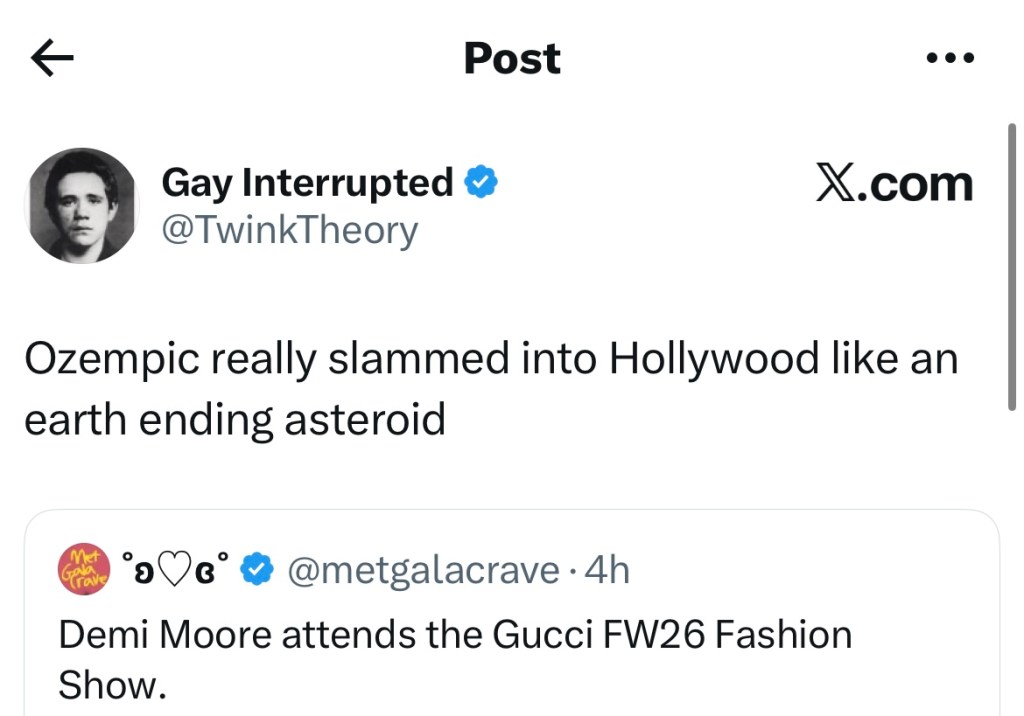
This doesn’t just seem to be in matters of food either. An all-around unsatiated epoch is being ushered in before us, in which pleasures are repressed and removed. We drink less, we have sex less, we eat less. Generationally, we are prudish yet oversexed, as a result of living through a media landscape that Gilbert (2025) argues in ‘Girl on Girl’ has been undergoing a process of pornification for the last two decades. As Benedict (2021) succinctly puts it, “everyone is beautiful and no one is horny”.
We are hungry yet starved, swallowing tasteless, high-protein gruel in the bid to feel fuller for longer, to get thinner quicker. Some are not eating at all. We continue to silence the senses, forgetting to live.
Life is so wonderless when you restrict. Food is so boring when you calorie count, exiling food groups in full. Food in this way is stripped of its sensual delights, of its raison d’être, not only as providing sustenance, but joy in equal measure.
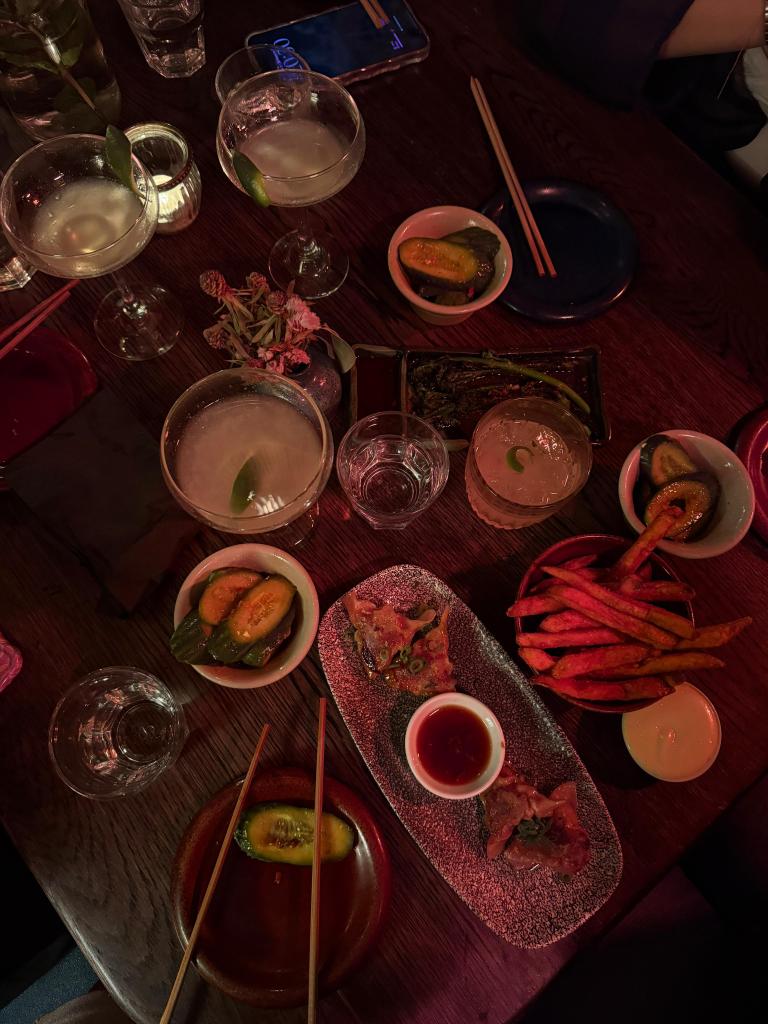
A friend often brings up a time I live-texted her my review of a pastry from a bakery we had both wanted to try. After describing it (mustard infused porchetta encrusted in flaky pastry, sealed with honey butter, mmm), then finishing it, I texted “this is what food is all about”. We reference this often when we eat good food, and it always makes her laugh. I become somewhat of a voluptuary when my tastebuds are intrigued.
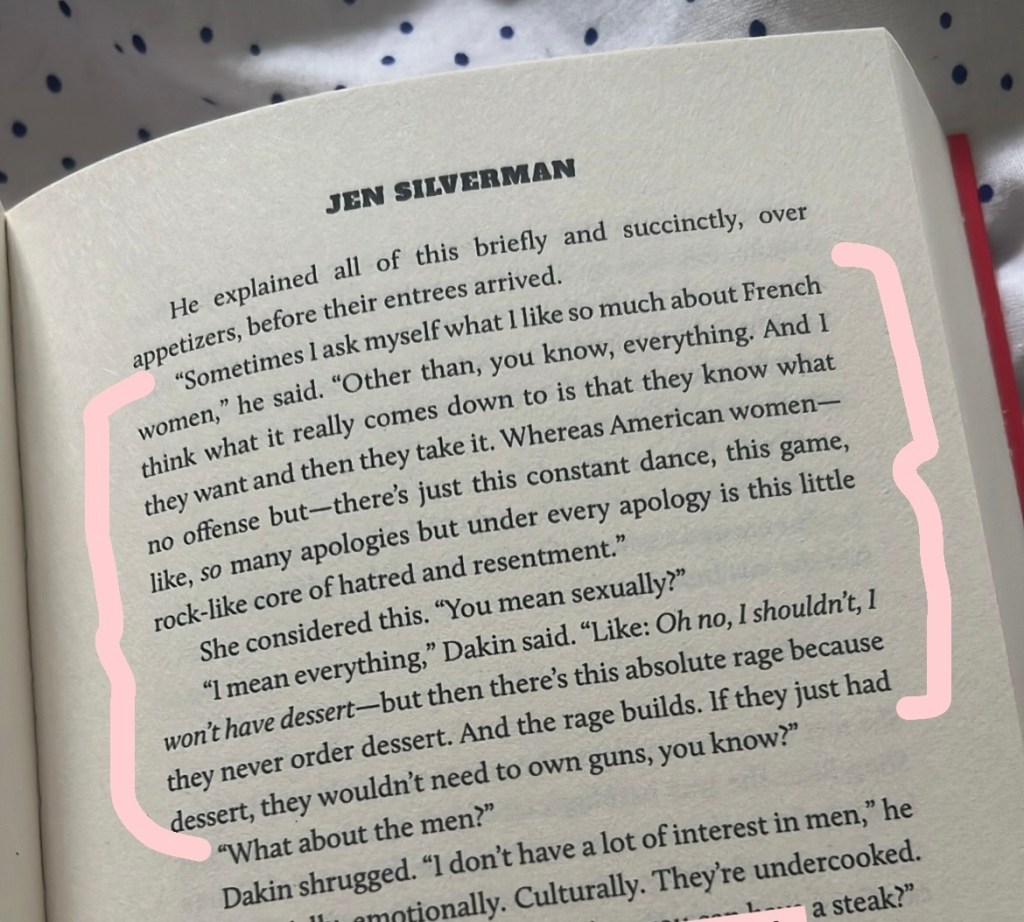
On supressing desires, Silverman writes in Sluts: “there’s just this constant dance, this game, like, so many apologies but under every apology is this little rock-like core of hatred and resentment. […] I mean everything, “Like: Oh no, I shouldn’t, I won’t have dessert—but then there’s this absolute rage because they never order dessert. And the rage builds” (Tea, 2024: 186). Whilst trying to avoid sounding like a decorative sign for a Gen X mum’s kitchen, I implore you to order the damn dessert. We cannot surrender to starvation, whether through needle prick, tea, or tablet. The people yearn to be satiated, we yearn to live again!

 Queencoc0 Talks
Leave a comment