‘She’s gone black-boy crazy, I’ve gone white-girl hazy
Ain’t no thinking maybe, we’re in love
She’s got jungle fever, I’ve got jungle fever’
–Stevie Wonder (1991)
On the second day of September last year, I met up with a friend at Cafe Boheme. Trotting through the back streets of Soho trying to remember the shortcuts I’d taken on various nights spent weaving through there, I arrived a little later than planned, overheating in my heavy trench coat. She was with a friend of hers from work and they had already nursed a cocktail each upon my arrival. We ordered fries to the table to share, and I a crisp Aperol spritz to cool me down. Her friend was discussing the ex of three years she had recently broken up with. I had met him briefly before and heard titbits about him through our mutual friend, mostly pertaining to how much of a flirt he was, a disposition that comes naturally and is to be expected when you are a 6ft4 Roman.
Through measured sips she shared details of his abysmal behaviour, revealing she also was never too fond of his family. After multiple visits to his grand home (he was from affluent beginnings) in the company of his upper middle class parents, she realised they were thoroughly displeased with the fact that he was in a serious relationship with a girl who wasn’t Italian. I was stricken with disbelief when she shared that his nickname for her, after finding out about her mixed Asian/European heritage, was ‘mongrel’. So much so in fact I audibly gasped. He should have been gone from the moment he uttered that I thought, even if it was ‘in jest’, as he had maintained.
“He always had this strange fascination with Black people” she shared as we walked her back to Leicester Square tube station. “He 100% fetishised Black women, it was disgusting” she said to us, lowering her gaze to the gum-riddled pavement as she recounted instances where this had become clear to her. “That’s so grim” I shared back, feeling especially uneasy at the idea of dating a guy who sees me solely through the lens of his fetishistic white gaze. “I’d catch him watching Black men as they walked down the street, just in this haze of their like, coolness”. To this I laughed. It seemed as though he possessed a sort of captivation with Blackness, which given his parent’s racist attitudes made sense. Black was cool but scary, sexy but not serious. Having a desire for it was to be concealed and subsequently was shrouded in shame.
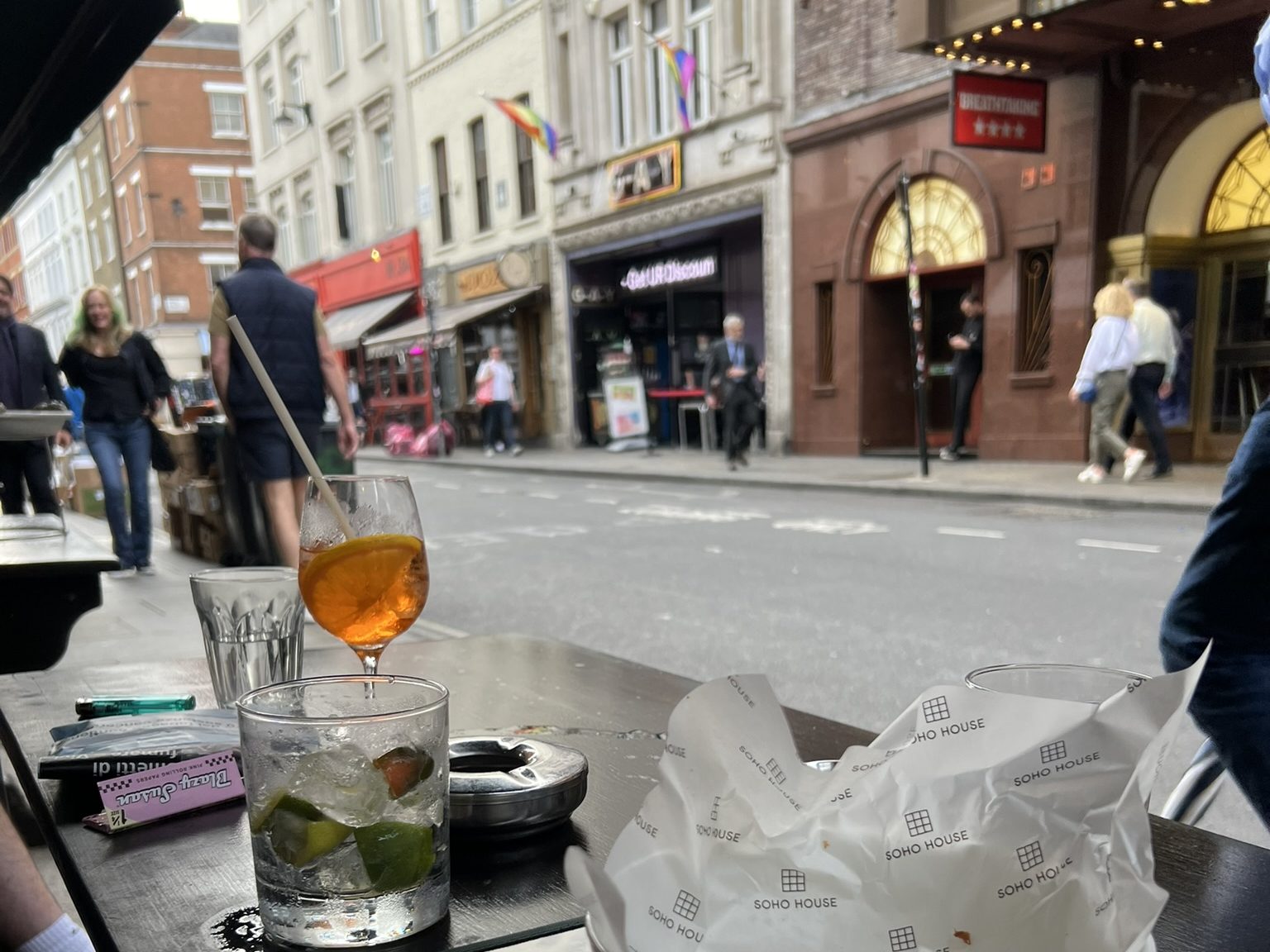
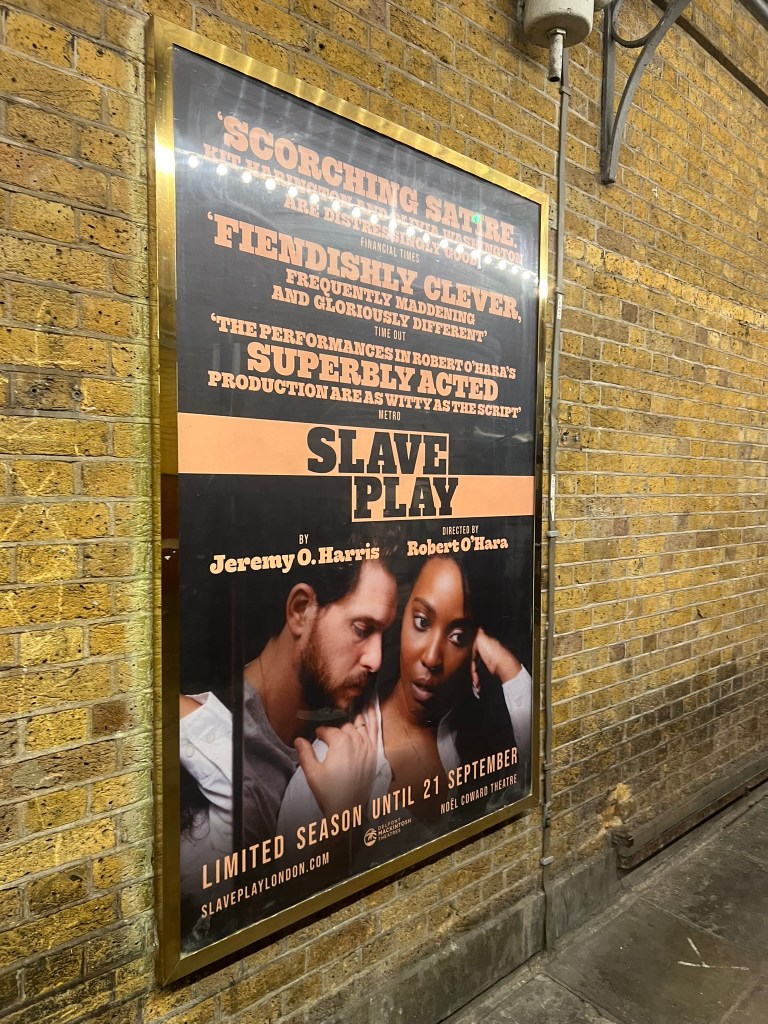
His behaviour had made some of my fears surrounding interracial dating present themselves, and it was too close for comfort. The discussion was rather on theme, because my friend and I were making our way to see Slave Play, the 12-time Tony award nominee by Jeremy O. Harris that had finally taken over London’s West End that summer. I was exceedingly eager to see it after hearing about it a few years prior, reconciling with the fact that I wouldn’t see it in action on Broadway and instead settling for getting my hands on a copy of the play in book form. Perhaps I’d put on a one-woman rendition of it in my bedroom if I really wanted to feel the performance of it all.
The subject matters it concerns itself with are heavy: race, trauma, power dynamics, interracial dating, sexuality, and taboo. It is satirical in a way that borders on the absurd. It’s premise: interracial couples in which the Black partners have lost their sexual attraction to their white spouses embark on an avant-garde psychotherapeutic practice, ‘Antebellum Sexual Performance Therapy’. It uses this comical but largely uncomfortable plot device to explore the legacy of racial violence amongst Black people today. The title itself is the sweetest play on words, exploring America’s relationship with slavery, and the idea of sexual ‘race play’, slave role-playing. It can be deduced that provocation is the very heartbeat of the production.
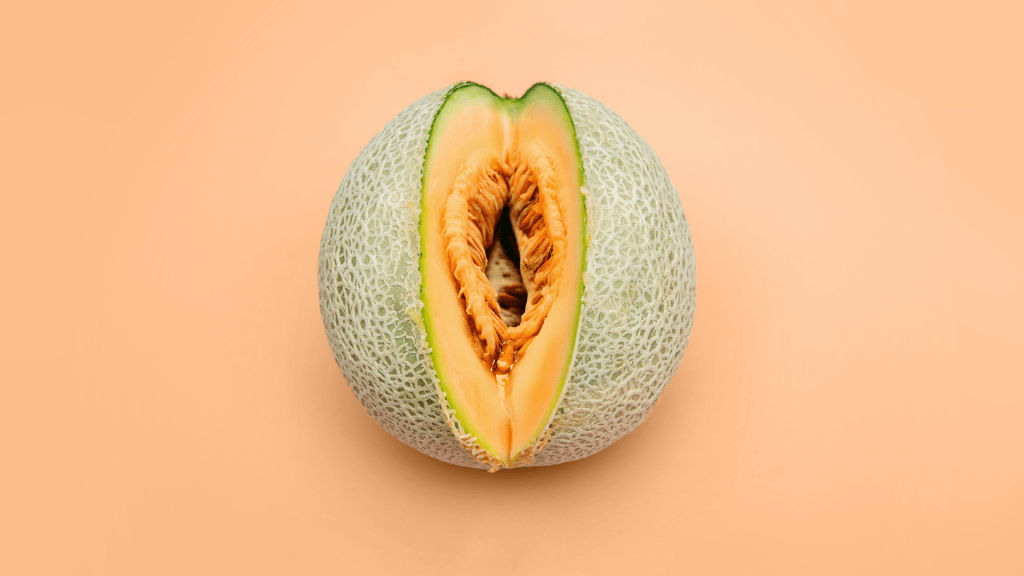
Everything about the play felt scandalous and titillating, and this was before we had even entered the theatre. Queuing outside and readying our tickets, we were given a sticker to cover our phone cameras with. The sticker displayed the same thing the marquee was emblazoned with, a honeydew melon with just a slice cut out, presenting the inner flesh. Upon receiving the sticker, we both looked at each other befuddled. What the hell was going to happen in this play?
When we sat down at our seats, we noticed a group of older white men in their 50s sitting in the row in front of us. “I think they’ve taken a very literal meaning away from the title, they’re in for a rude awakening when it starts” my friend whispered to me, we both started laughing. “Slave play?! Oh, I’ll have some of that” I reply back, in an accent that best emulates a 50-something year old geezer.
She went out to buy a sharing box of extortionately priced Maltesers, and when she came back, I had much to discuss before the play began. “You know I’m not one to kink shame, but I just can’t with race play. It’s just so…” I trailed off, and she finished my sentence in agreement. “No, I get what you mean. I wouldn’t be comfortable doing it”. For me it is in the same bracket as age play, or Daddy/Daughter stuff, it’s simply disturbing. Some may argue race play is reflective of low racial self-esteem, at the very least it is indicative of some internalised shame around racial difference. For those white who engage, it reveals a racialised fantasy in its most insidious form.
In a prior conversation with another friend about the play’s themes (I truly was its biggest fan and promoter that summer, before I even got my ticket), she shared my sentiment. Though not being able to relate to this proposition on a race level, i.e. whether she would let a white man call her a ‘negress’ in bed, she felt the same about other forms of degrading. “I mean what is the difference between calling me a bitch when we have sex and then in an argument?”, it begged the question of whether context could really make one acceptable and the other deplorable. It was a lot to grapple with. Though I impart understand the psychodynamics behind wanting to be degraded (and in no ways am I demonising that desire), I personally don’t find it all that enticing. What happened to a little praise?
The play opens with the severest form of race play, as our main protagonists, Kaneisha (Olivia Washington) and Jim (Kit Harrington) are plummeted into the roles of slave girl and slave master. Negress, n*gger, cotton-picker, these terms are all directed at Kaneisha from her beau. As Rihanna’s song Work blares in the background, she slowly whines to the beat whilst her ‘slave master’ watches and admires. We also follow two other couples in various forms of racial role play, a white woman and a mixed race airheaded hunk, and a Black man and his “but I’m not white, white” boyfriend. The latter dynamic is also interesting because it is the only couple wherein the Black partner is not the subservient, ‘slave’ party.
We focus back on Kaneisha and Jim as they get close and he continues to racially degrade her. He’s behind her, they kiss, he is bending her over, ready to initiate, just before he shouts “Starbucks!” the apparent safe word for the raced role play. It is then revealed to the audience that this scene, like the other two, are stimulated in a clinical environment with therapists observing.
The opening scenes in which we see varying forms of racial roleplay seem to go on for an inordinate amount of time. I started to worry the whole play would take this form. Extreme and obscene accounts of what in our worst nightmares we imagine happens behind the closed doors of interracial couples. The exact reason why, for Black people, we are warned against them. Because there is a subtext of this waiting for us. Interracial relationships are a cultural clash and disapproving parents at best, and this at worst. The roleplaying scenes are uncomfortable, unflinching, prying, and push you to the limit of what is tolerable.
Eventually the meat and potatoes of the play’s themes are discussed in non-sexual contexts. Most importantly how racial trauma is felt somatically. Through my own discomfort I can understand why reviews are so divided, particularly for viewers who go in blind, though more fool them. I did however enjoy it, because of how it tackles notions of race, power, and desire outspokenly and in the most uninhibited fashion, getting to the root. I also think the best art is art that produces profound emotional responses, positive or otherwise.
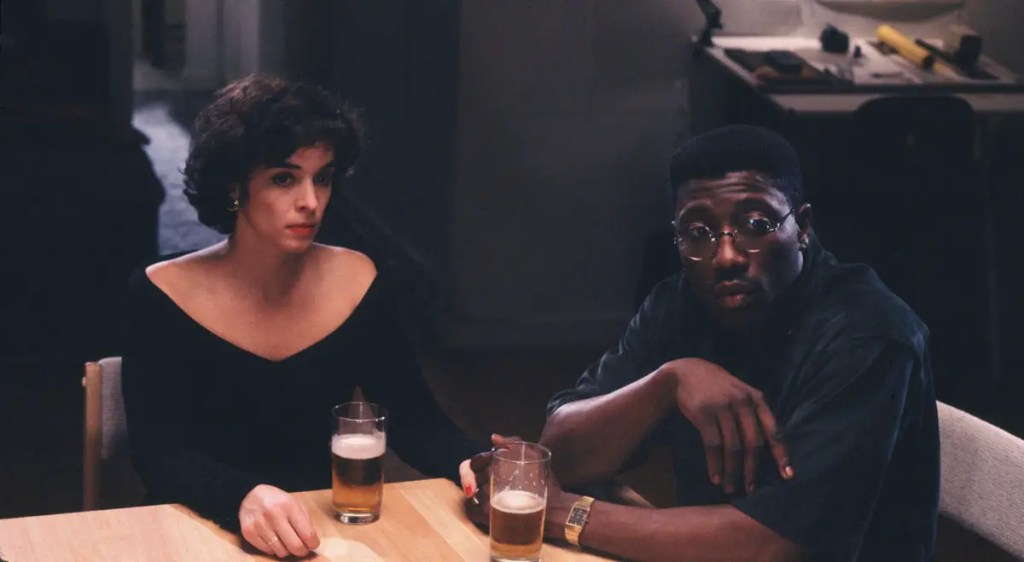
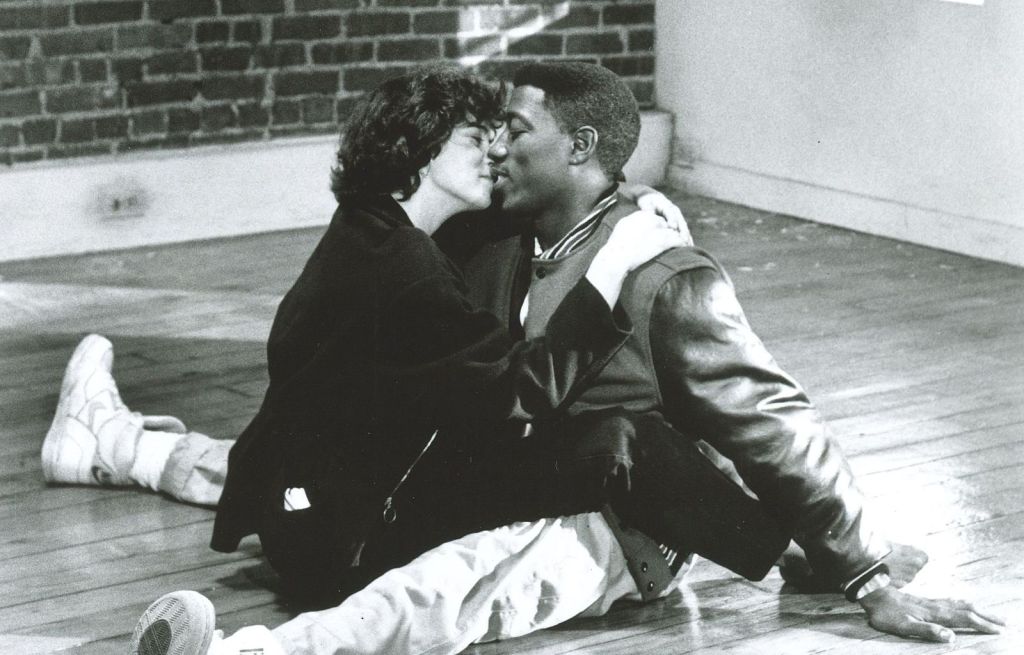
Anabella Sciorra and Wesley Snipes in Jungle Fever (1991)
Last weekend I had finally got round to watching two films that sat high on watchlist, Killers of the Flower Moon (2023) and Jungle Fever (1991). These titles of very distinct directorial styles are however thematically linked, concerned with overlapping topics. Where capitalist-fuelled greed takes centre stage in Killers of the Flower Moon, race in modern America is replaced in Jungle Fever.
Similar in its hyperbole like that of Slave Play, the unflinching Jungle Fever follows a married Black man (Wesley Snipes) who embarks on an affair with his white, Italian secretary (Anabella Sciorra). As it is takes place in the 90s and in melting-pot New York city, it is surprising and somewhat maddening to witness the conversations being had about dating outside of one’s race. To think about their reality amongst both groups (the African Americans and the Italian Americans) when it came to their stance and ultimate direct rejection of interracial pairings speaks to just how dire race relations in America were even just a decade before the millennium.
When Angie, the secretary, reveals to her friends that she is seeing her Black boss, her friend replies frankly that she finds it disgusting, offering something to the effect of, ‘you’re such a pretty girl, you could get any man you want, and you go for a…’ When news reaches her tight-knit Italian community, and traditionalist, racist Father, Angie is brutalised, beaten and disowned. A close friend of Flipper, the boss, similarly shares disdain but not to those heights, nor because he believes white women are disgusting or beneath him, but rather because it is a far too risky feat that breads avoidable conflict and social exclusion. Through the response and rejection Flipper gets from his community, we explore two pivotal questions: Why go white? What’s wrong with Black love?
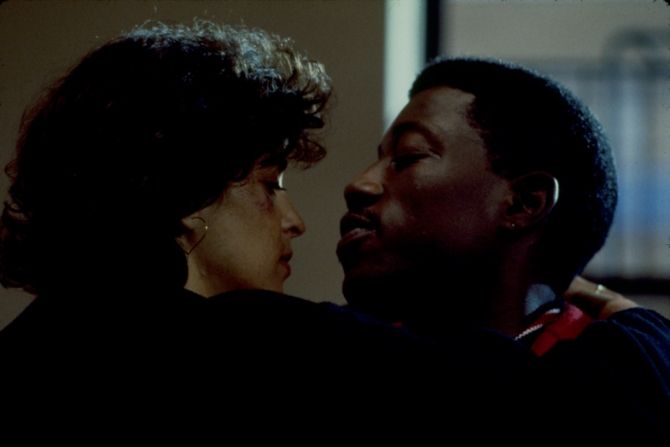
What I find interesting and also refreshing about Spike Lee’s narrative choice is that he chooses not to have the protagonist be deeply in love, as a sort predictable and placid offering to remedy against pervasive racism by exclaiming love conquers all. The origins of Flipper and Angie’s affair came down to two factors, proximity and intrigue. Flipper was mystified and perplexed by white women, and she in a daze of his dark skin, self-confessed by her during their first intimate conversation. They are each other’s ultimate taboo, and for them that was exciting enough pursue their curiosity.
With Angie now shunned and Flipper separated from his wife after his ill-thought infidelity, it is made glaringly apparent that their affair is held together only through mutual ostracization from their communities. Their union ends in disillusionment when Flipper simple decides “it’s not worth it”, returning back to his wife and family. Angie also returns home and back to her community. Put simply, they were exhausted by the fight.
The existence of their relationship is not important for the movie to serve its purpose in exploring racial dynamics in modern America. Rather, their relationship serves as a vessel to explore themes of racial identity, class, status identity, oppression and social immobility. These are all themes persistent in Killers of A Flower Moon where we devastatingly bore witness to a sort of domestic colonisation of the Osage people through their women. Osage women are abused, murdered, and discarded by their white husbands just for a chance at obtaining their wealth.
They are othered, exoticised women merely to be put up with for the sake of financial gain by white, lower class men trying their luck in climbing the financial ladder. William Hale (Robert De Niro), the films primary antagonist and scary Southern villain eerily asks Ernest (Leonardo DiCaprio) upon his arrival to Osage County, Oklahoma, “do you like em red?”. The obvious racially informed aversion and contempt the white Southerners had for the Osage made it even more frustrating each time these barely charming men would be let into the hearts of the at-times, oblivious women. These two films when watched consecutively bring forth a sobering reality when it comes to the interracial.
*
To my own Mother’s horror, I spoke to and proceeded to go on a date with a white man two winters ago. What makes this especially amusing is that out of my interracial parents, my mum is the white one. Though her disapproval came in the form of slight remarks bandaged in humour at first, as things progressed and dates increased, genuine concern began to take over.
It may not make a whole lot of sense to an outsider looking in. Why would a white woman disapprove of her daughter dating a man of her own racial background? My mother’s reasoning was simple, men were already tough enough to decipher and engage with without bringing issues of covert racism and fetishisation into the mix. There is no place for racism in romance! She was particularly harsh when it came to ideas surrounding men of her own race, and a large fear of hers was that her daughter would become the fetishised object of a white man’s affection. Daughter’s First White Man was something she had not prepped for, nor did she care to imagine it’s reality.
He of course was not the first man of unmelanated skin that I had found attractive. There were many crushes formed, particularly throughout my adolescence. At 13, I owned a top that read “I ❤ Skater Boys” and I meant exactly the first guy that comes to your mind when you conjure up a skater dude. Floppy, fringed, straight hair. My type (I always tell people when asked that I have various) takes a myriad of forms, but practically all of whom I had dated prior were Black.
I did however find myself making a point of mentioning his whiteness, beating my friends to the anticipated punchline. In actuality, that was the last thing they cared about. On my way home from the first date, I had messaged a friend rather dramatically “Just left a date… with a white man” to which he replied, “if it ain’t snowing you ain’t going!!!”. I replied back with laughing faces punctuated by one of my favourite emoji, two hands covering both eyes.
Whilst in part it was to do with the newness of the experience, this tendency to mention our racial difference was largely down to a fear that my dating choice could put my Blackness up for questioning from others. The fact these questions would come from a place of ignorance was beside the point.
Working through the notion needing to ‘prove my Blackness’ as an early adolescent, it seemed to, in a much smaller sense, pop back up upon embarking on an interracial affair. Judgement from others and anxieties over being fetishised that might reveal itself too late were at the forefront. Walking through Brixton once with him I had made a joke to that we should perhaps cross the street when holding hands so as not to trigger contempt from the Black Israelites (they’d already tell me off for wearing trousers as a woman). He laughed and told me he had never heard of them, I recommended Louis Theroux’s Weird Weekend episode on Black Nationalism. I also thought he should spend more time in Brixton.
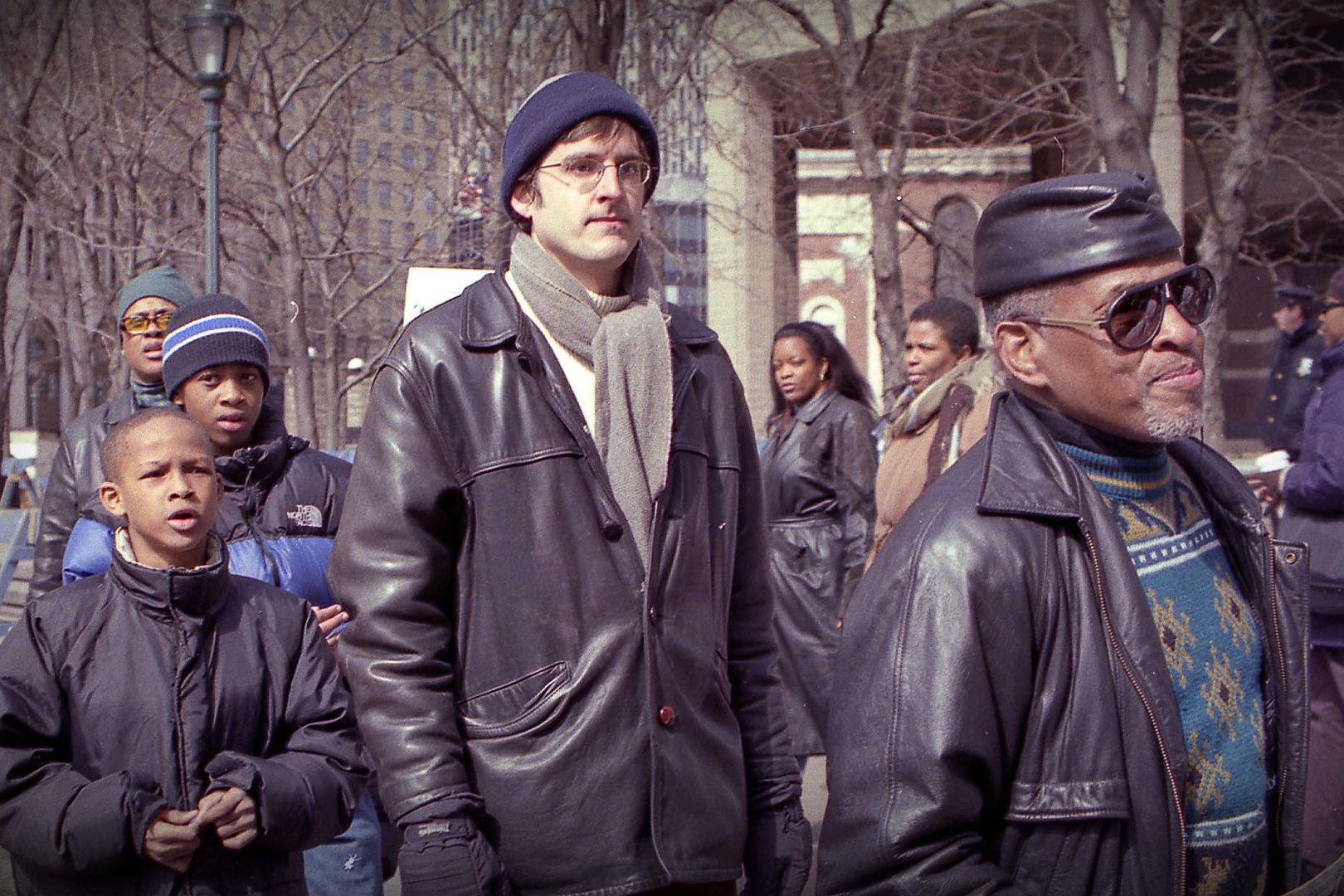
I love you Louis! Episode linked above.
Thankfully, I had no racial mishaps to report back. Race was never a point of dispute or tension between us, and I had a pretty acute radar when it came to picking up on any hint of a penchant for race play and associated thinking. I also was not the first non-white person he had dated, a love for A Bronx Tale (1993) gave it away (recently rewatched, and it really is brilliant). This fact disproved the notion of being no more than a spicy buffer in between more serious relationships with women of his own complexion, another eery thought.
My own anxieties were not reflective of an internalised racial inferiority, quite the contrary. Rather it was a result of social conditioning that argues dating outside of my race was to officially sell-out. To choose not to love myself, my people, and to remove myself from my community ties. To devote myself to the White Man. This line of thought is of course ridiculous, and I do not need to be reminded of that. Handsome is handsome, connection is connection, dating should not be restricted to purely intra-racial solely because doing otherwise would make you a self-hating ethnic with an inferiority complex. Whilst there is a small reality of that for some, we must be careful not to paint with the same brush anyone who happens to date interracially. Whilst my mum’s fears and initial disapproval stemmed from motherly protection, they relied too much on overgeneralisations.
Though me and my Dad relish in jokes by Dr. Umar, mostly making reference to his ‘white brainwash’ meme, and I’m partial to point out his past proclivity for white women (please let the record show my Dad loves his Black self), we know it is nonsense. That’s why it is so humorous. Like most things we tend to be insecure about, there is little truth to them. Sometimes you might just go a little white boy hazy.

 Queencoc0 Talks
Leave a comment