
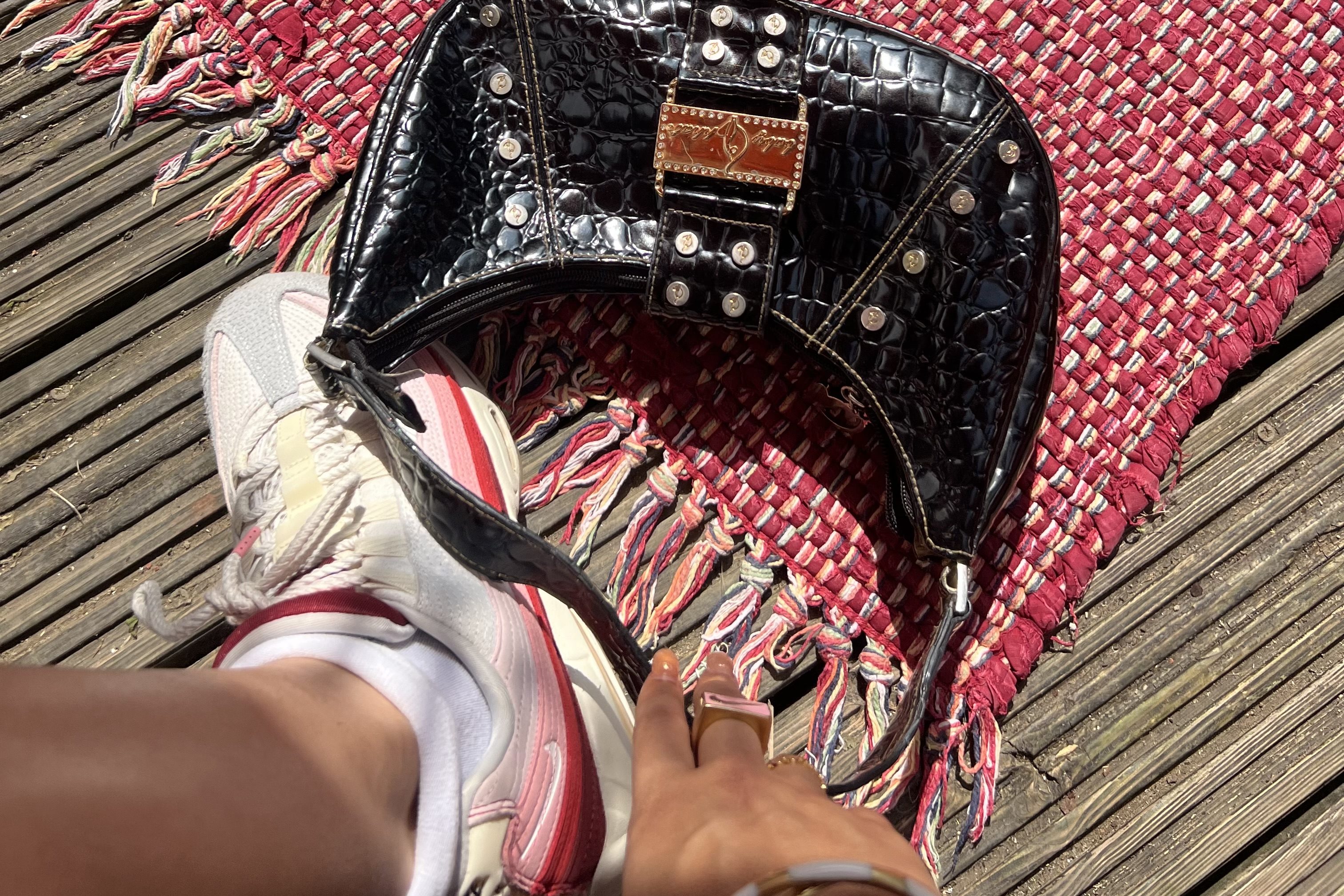
If you know me, you know that I love trainers. Receiving compliments on my trainers transforms my face into a cheesy smile every time. I usually go on to state how I searched high and low to find this specific colourway, or how I got a really good deal on them, or that they were just re-released. The day that I finally found white Nike TL Shox in a size 7… utter bliss (I’m currently on the hunt for an all-black pair). I know we shouldn’t find joy in materialistic things, the best things in life are free and so on, but there’s nothing like finally seeing the trainer you want restocked in your size, or seeing a brand release the exact colourway you dreamed of in a shoe. As a child my need to collect trainers started with Converse. From the age of 10/11, all I wanted was a classic high top pair. I owned them in black, burgundy, lilac, as well as a white pair adorned with multi coloured dots. By my tweens I pivoted away from Converse to Vans. My first pair were dark purple with a black lace overlay *shudders*. I had a black leather pair for school and a purple-y blue metallic pair before opting only for the black and white Old Skool Vans when I was 15. To this day, they are one of my favourite silhouettes and I’ve rebought them twice, wearing the prior pair to death each time. Concurrently, my love of true sports trainers by Nike, Adidas, and Rebook started to form, and I’ve never looked back. Trainers, they could never make me hate you.
Growing up working class, I think my relationship with trainers started from before I was conscious of it. My mum has still kept hold of both mine and my brother’s first ever pair of trainers, and our first ever pair of Nikes (my first pair were itty bitty white Reebok classics), fondly revisiting the memory of buying them. She always goes on to say we both had a significant collection of trainers growing up, pridefully. Trainers are huge status symbols amongst the working class. It wasn’t until reading Safe: 20 Ways to be a Black Man in Britain Today, this relationship with branded trainers and working class communities was solidified in black and white. The author speaks to the role branded trainers play, particularly during adolescence, within Black working class spaces. Having the right pair of Nike trainers that were on trend at the time was imperative for notions of coolness and in turn, was a tool to obtain social capital. Trainers served as status symbols, evidence of style, coolness and economic prosperity (since these trainers definitely aren’t cheap). Particularly for those in low-income communities when many of us went without, and our parents owned nothing in name, owning a pair of Nike Air Force 1s or Adidas Superstars was a means of proving that you had something.
A lot of the times, these gestures of symbolic economic prosperity via choice of footwear is minimised to a frivolity by outsiders. “oh, it’s just people following silly trends” or “it’s just a waste of money”. Instead, it can be seen as a form of Black cultural expression, since trainers are heavily embedded in both Hip-Hop culture, and streetwear (See: This is Not Fashion: Streetwear Past, Present and Future, King Adz and Stone, 2018) as a stylistic movement. Particularly for the working class, choice of footwear could make the difference between getting picked on at school or being liked. Shoe choice was an avenue in which you could express your identity and also prove yourself. Whilst my school days are over, I can’t help but reflect on whether these notions impacted my choice of footwear and if they served as the foundations for my relationship with trainers. I remember 2013 Christmas morning, opening my gift from my brother. I could already tell by picking up the wrapped box that it was going to be trainers. I eagerly ripped off the wrapping paper to reveal the signature orange Nike box. Barely able to contain my excitement, I lift up the lid and see before me a pair of dusky pink suede Nike Blazers with a silver glitter tick. I instantly stand up and hug my brother tightly, before returning to the floor to try them on. My first thought was how excited I was to wear them, but also how excited I was for the next mufti day at school where I could debut them to my classmates. Oh, it was worth the wait! I was 13 and Nike Blazers were the IT shoe. Getting those nods of approval, or a step further, looks of adoration for your trainers was everything. I remember a girl I sat next to in science class being obsessed with Blazers and owning a handful of colourways, each non-uniform day rocking a different pair.
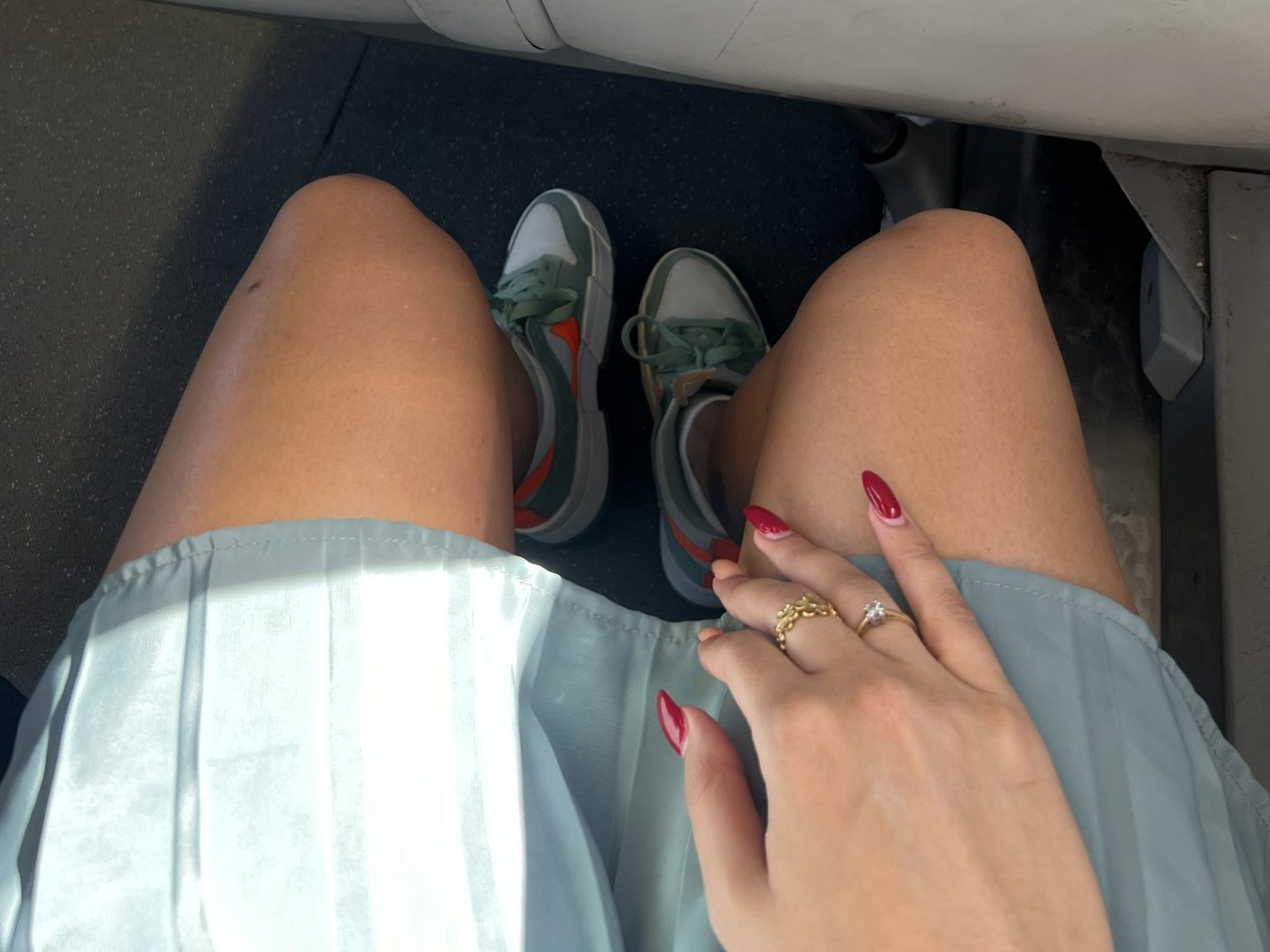
Growing up, most Christmases I could expect a pair of trainers under the tree, and to this day it’s still what my brother will get me as a gift. A pair of white and blue Nike Air Max 1s one year, Nike X Liberty London limited edition Roshe Runs the next, followed by classic white and black Adidas Superstars after that. By no means were the prices of these shoes lost on me, and I knew my mum would save and plan to get them for me and my brother. If anything, it made me cherish them more. I would look ‘cool’, be revered by my peers and on top of all that have a comfy pair of shoes to walk around in! Shoes which I kept pristine religiously, letting the weather dictate whether I would take them out of their box that day. I’m still like that today, designated scrubbing brush at the ready if it has unexpectedly rained when I’ve worn them, and the fabric of my trainers have taken a hit. I have a friend who almost always steps on or knocks my foot when we go out (we’re both clumsy), and each time she immediately apologises, remorse flooding her face, “my creps!” I’ll shout, only half joking. And then we’ll laugh.
My mum, my brother and I are all sneakerheads. As a teen, rows of trainers would fill my brothers bedroom, most notably Nike Air Force 1s in an array of colour ways. I would look at his ever growing collection as a child and think “I can’t wait to have a job so I can buy as many trainers as him”, no longer having to wait till birthdays or Christmas. We often talk about the next trainer we want, sending voice notes accompanied by screenshots of the shoe itself, both adoring streetwear. Since trainers hold high significance within the Black community, operating as emblems of style, our Black identity is another force which has influenced our styling proclivities. For Black people growing up working class, disenfranchised, and financially restrained, trainers are “a means to navigate an environment within which they are given very few tools or options to create an identity and establish their self-worth” (Breaks, 2019: 33). Through fashion and style, we can establish identity whilst also feeling a part of a collective.
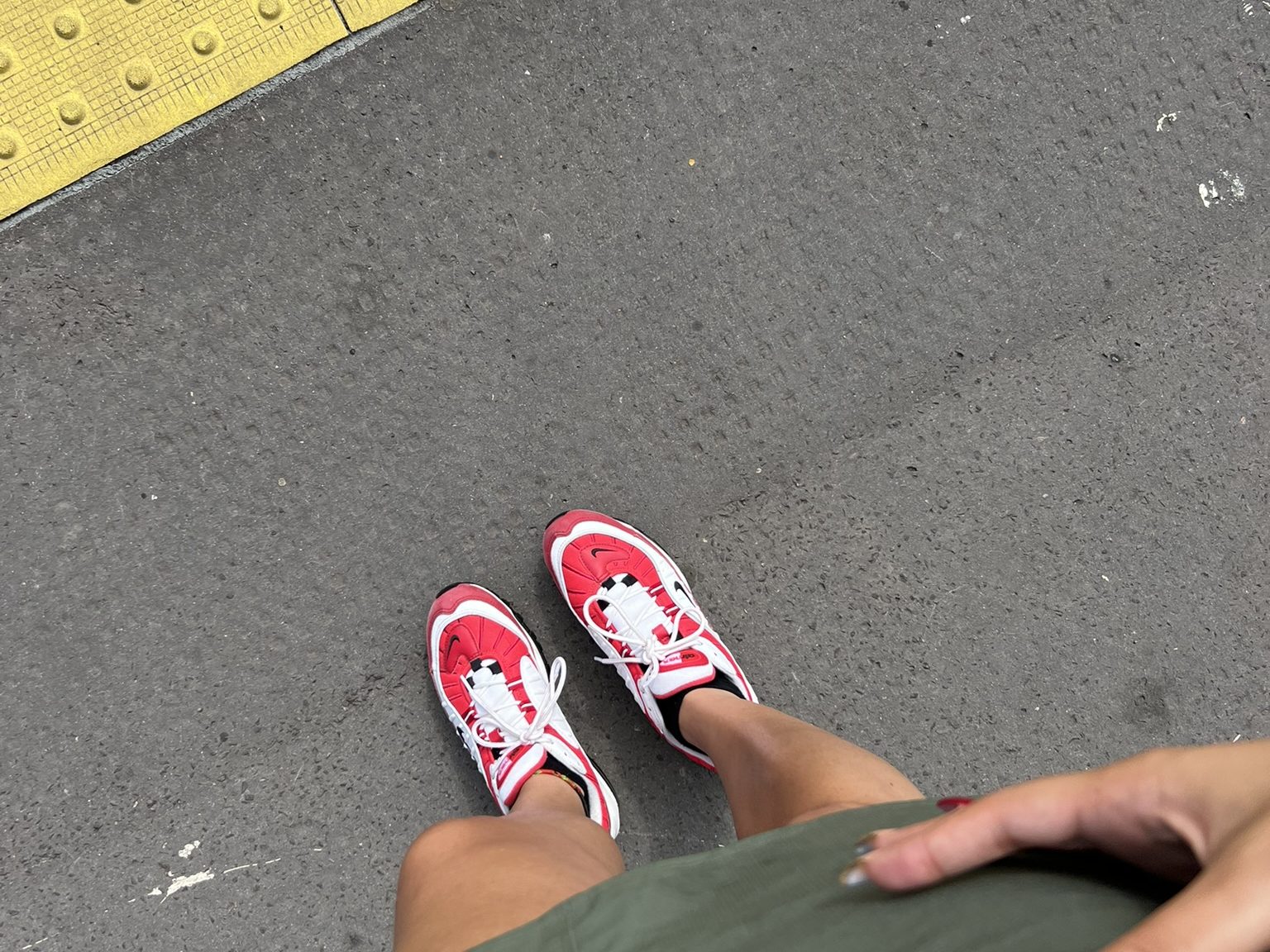
Today, I don’t have that inner insecure teen seeking validation through popular choice of clothes. I no longer feel constrained to stick to a set ‘uniform’ and haven’t for many years. Notably since I left school. I pick the shoes I like, and I love them even more than the typical trainers I would want growing up purely because of their notoriety amongst peers. As you get older, your style develops, your taste shifts and changes, you wear the things you like because you feel good wearing them, not because your agemates deem them as the only acceptable things to wear. In saying this, it stills feels good to receive a compliment on my choice of crep. To have them be acknowledged for their rarity or prestige, a nod to my good taste. We all like compliments after all. Trainers are another mode of fashion which proves that the choices we make pertaining to the wardrobe do not happen in a social vacuum. Instead, we are influenced subculturally, socially, along both racial and classed lines. As I always maintain, fashion is not a frivolity. My lifelong love affair with trainers is informed by my class and cultural identity, as well as my love for fashion, as a lot of our clothing choices are, no matter your background. So, what informs your styling choices, by matters of the shoe or otherwise?

 Queencoc0 Talks
Leave a comment